Image


The Specialisation in Advanced Musculoskeletal Research and Practice aims to provide students with advanced, in-depth knowledge and practical skills in musculoskeletal research and clinical practice.
Students will gain an advanced understanding of musculoskeletal disorders and interventions, develop practical skills in clinical assessment, imaging interpretation, surgical and non-surgical management, and rehabilitation, and build research capabilities in evaluating clinical outcomes, integrating technology, and applying evidence-based practice.
Interdisciplinary learning with experts
Total 69 Credits
(24 credits)
(18 credits)
(27 credits)
The courses listed below are offered subject to availability and minimum student number.
Courses marked with an asterisk “*” are compulsory.
Course Code | Course Name | Credits |
MSPH7901 | Introduction to Biostatistics | 6 |
MSPH7902 | Introduction to Epidemiology | 6 |
MEDI7901 | Cell Metabolism | 6 |
PAED7901 | Principles to Genetic Counselling | 6 |
PAED7902 | Introduction to Genomic Medicine and Precision Health | 6 |
PATH7901 | Laboratory Methods and Instrumentation | 6 |
PATH7902 | General Cytopathology | 6 |
PATH7903 | Practical Course in Laboratory Methods | 6 |
PATH7904 | Fundamentals of Common Human Diseases | 6 |
PATH7905 | Recent Advances in Cancer Biology | 6 |
PHAR7901 | Principles of Drug Action | 6 |
PHAR7902 | Clinical Trials Management and Pharmacovigilance | 6 |
MSBS7901 | Molecular Biology of the Gene and Diseases | 6 |
MSBS7902 | Advanced Cell Biology | 6 |
MSBS7903 | Integrative Perspectives of Body Functions | 6 |
SURG7901 | Human Genomics in Healthcare and Society | 6 |
Students should choose one of the following blocks.
Course Code | Course Name | Credits |
| Block A: Spine Surgery | ||
| OSUR7101 | Spine Surgery: Biomechanics and Assessment of Patients | 6 |
| OSUR7102 | Spine Surgery: Intraoperative Spinal Cord Monitoring | 6 |
| OSUR7103 | Spine Surgery: Laboratory Techniques | 6 |
| Block B: Joint Replacement Surgery | ||
| OSUR7104 | Joint Replacement Surgery: Applied Anatomy, Biomechanics and Biomaterials | 6 |
| OSUR7105 | Joint Replacement Surgery: Operative Surgery | 6 |
| OSUR7106 | Joint Replacement Surgery: Outcome Measurement | 6 |
| Block C: Advanced Musculoskeletal Imaging | ||
| OSUR7107 | Advanced Musculoskeletal Imaging: Anatomic and Kinesiological Examination of the Spine | 6 |
| OSUR7108 | Advanced Musculoskeletal Imaging: Micro-CT and Paraspinal Muscle Imaging | 6 |
| OSUR7109 | Advanced Musculoskeletal Imaging: Spinal Cord | 6 |
| Block D: Orthopaedic Trauma Surgery | ||
| OSUR7110 | Orthopaedic Trauma Surgery: Fracture Healing and Biomechanics of Fixation Devices | 6 |
| OSUR7111 | Orthopaedic Trauma Surgery: Operative Surgery | 6 |
| OSUR7112 | Orthopaedic Trauma Surgery: Outcome Assessment | 6 |
| Block E: Orthopaedic Rehabilitation | ||
| OSUR7113 | Orthopaedic Rehabilitation: General Principles | 6 |
| OSUR7114 | Orthopaedic Rehabilitation: Rehabilitation of Spinal Cord Injury | 6 |
| OSUR7115 | Orthopaedic Rehabilitation: Application of Electrodiagnosis and Ultrasound in Orthopaedic Practice | 6 |
| Block F: AI and Orthopaedic Bioengineering | ||
| OSUR7116 | AI and Orthopaedic Bioengineering: Fundamental Principles | 6 |
| OSUR7117 | AI and Orthopaedic Bioengineering: Applications of Orthopaedic Bioengineering | 6 |
| OSUR7118 | AI and Orthopaedic Bioengineering: AI-assisted Diagnostics and Treatment in Orthopaedic Practice | 6 |
Course Code | Course Name | Credits |
| OSUR7000 | Capstone: Advanced Musculoskeletal Research and Practice* | 27 |
| MMSC6001 | Dissertation Writing* | N/A |
| MMSC6003 | Research Ethics* | N/A |
The "Advanced Musculoskeletal Research and Practice" Capstone project provides students with an opportunity to integrate theoretical knowledge with practical application in the field of orthopaedics. Students will engage in comprehensive literature reviews, develop research hypotheses, design innovative experiments or data analyses. Through hands-on experience, they will develop skills in clinical management, problem-solving, and evidence-based practice in orthopaedics. The whole process will be closely supervised by the students’ supervisor. Ultimately, students will gain a comprehensive understanding of advanced musculoskeletal topics, prepare for their future clinical or research careers, and contribute meaningful insights to the field through their innovative projects.
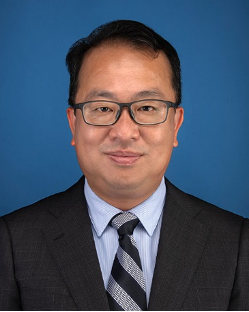
Dr. Lam, Chor Yin
Clinical Associate Professor, Department of Orthopaedics and Traumatology, School of Clinical Medicine, LKS Faculty of Medicine
Email: lamclive@hku.hk
Dr. Lam Chor-yin graduated from the University of Hong Kong in 1993. He received his orthopaedic specialty training in Prince of Wales Hospital. He later sub-specialized in orthopaedic rehabilitation and joined Tuen Mun Hospital in 2006. He pursued further study in occupational and environmental health, and he was awarded Master of Public Health from Harvard University in 2007.
Dr. Lam was previously the Consultant and Head of Rehabilitation Team, Department of Orthopaedics and Traumatology, Tuen Mun Hospital. He joined the Department of Orthopaedics and Traumatology, Li Ka Shing Faculty of Medicine, the University of Hong Kong as a Clinical Associate Professor in 2021. He has special interests in spinal cord injury rehabilitation, work injury rehabilitation, secondary prevention of fragility fractures and application of electrodiagnosis in orthopaedics.


